4 basic, easy-to-remember lighting setups to get you started:
One Light Portrait
What to Look For
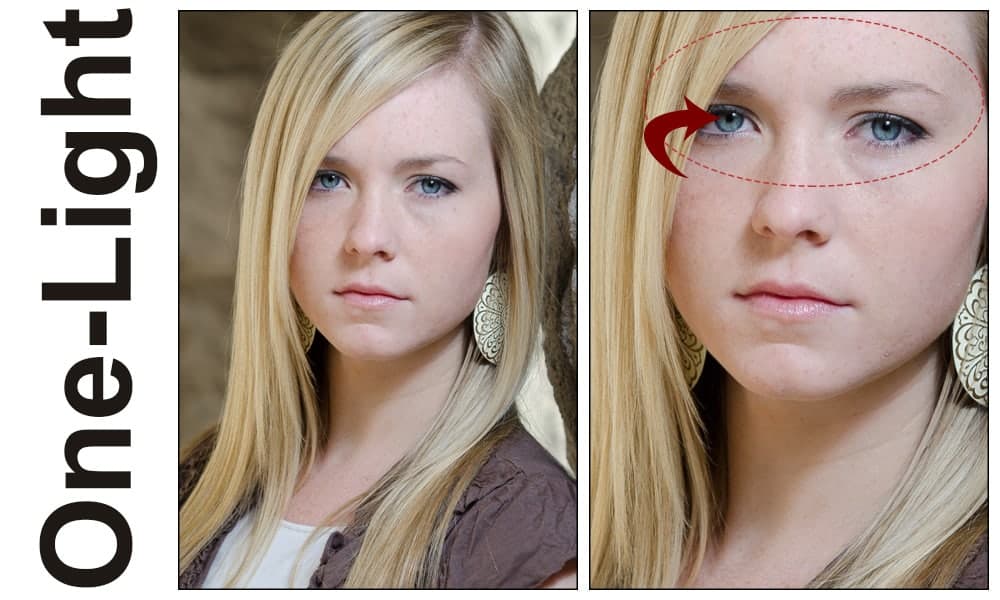
One Light portraits can be difficult to detect, unless you were the one taking the photo. One way to know if there was light involved is to look at the catch lights in the model's eyes. Seeing the catch lights gives you an idea of where the light was placed and if there was more than one light.
One Light portraits can be difficult to detect, unless you were the one taking the photo. One way to know if there was light involved is to look at the catch lights in the model's eyes. Seeing the catch lights gives you an idea of where the light was placed and if there was more than one light.
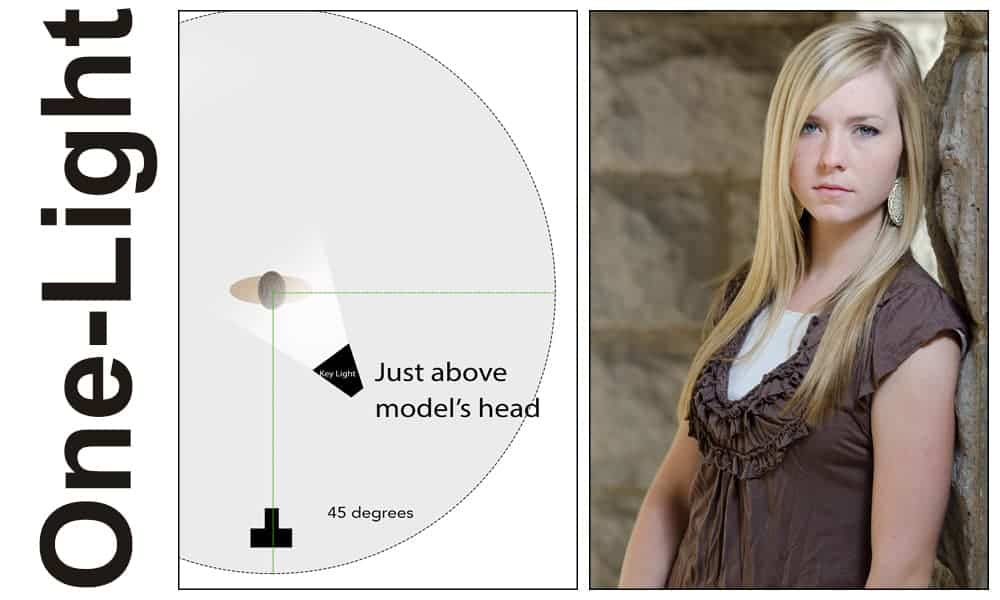
Using one light will work best when you have other ambient light in the photo. Your flash becomes the key light. It is easier to expose for the background when you are adding the light to your model.
The Setup
| Some Tips
|
Butterfly Lighting
What to Look For
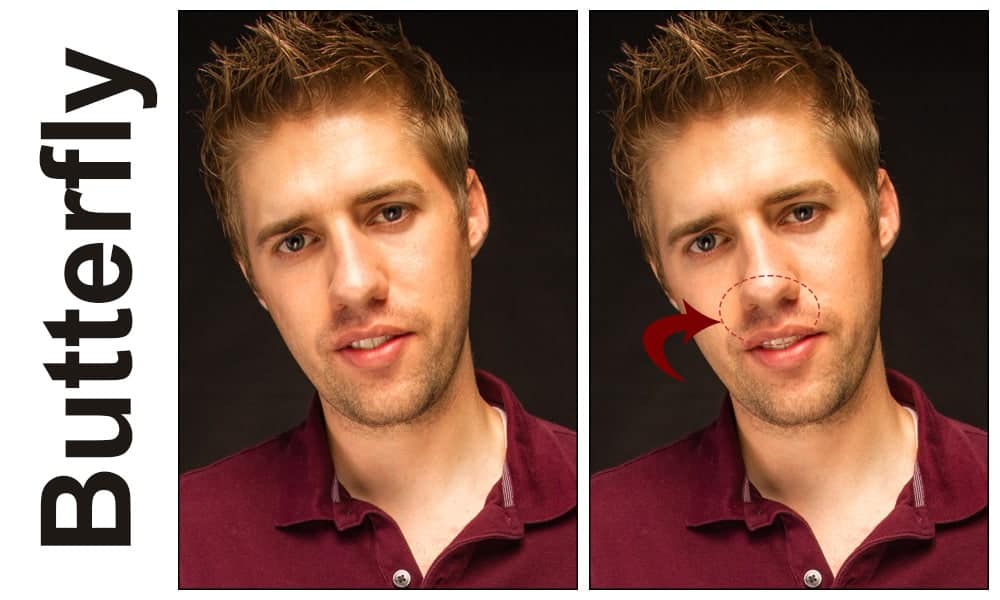
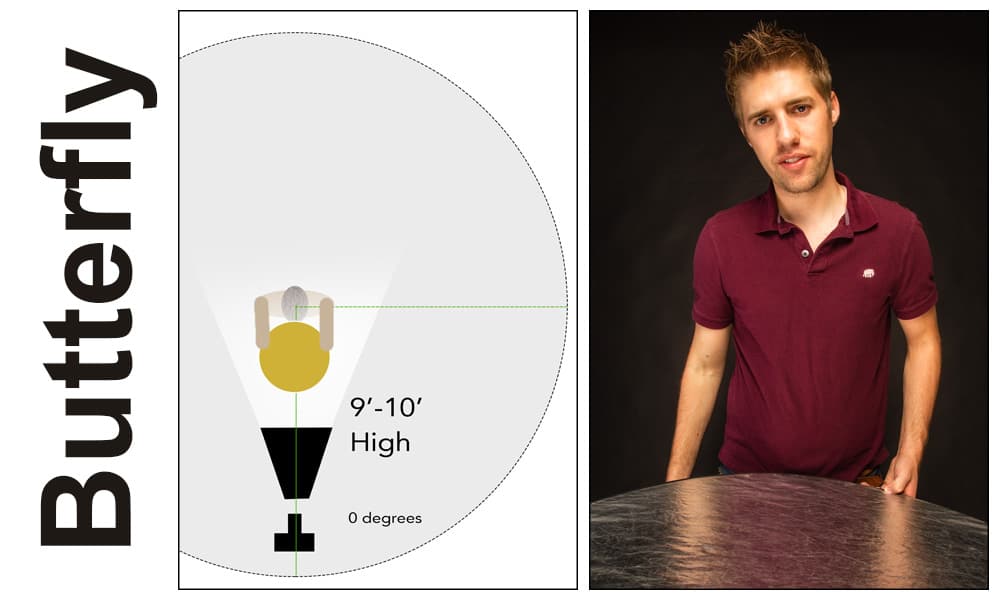
You can easily identify butterfly lighting by the small shadow that appears under the model's nose. To fill in the shadows a little, you will most likely need a reflector or second flash pointed up. This makes it so the shadows aren't so long on the face.
You can easily identify butterfly lighting by the small shadow that appears under the model's nose. To fill in the shadows a little, you will most likely need a reflector or second flash pointed up. This makes it so the shadows aren't so long on the face.
The Setup
| Some Tips
|
Rembrandt Lighting
What to Look For
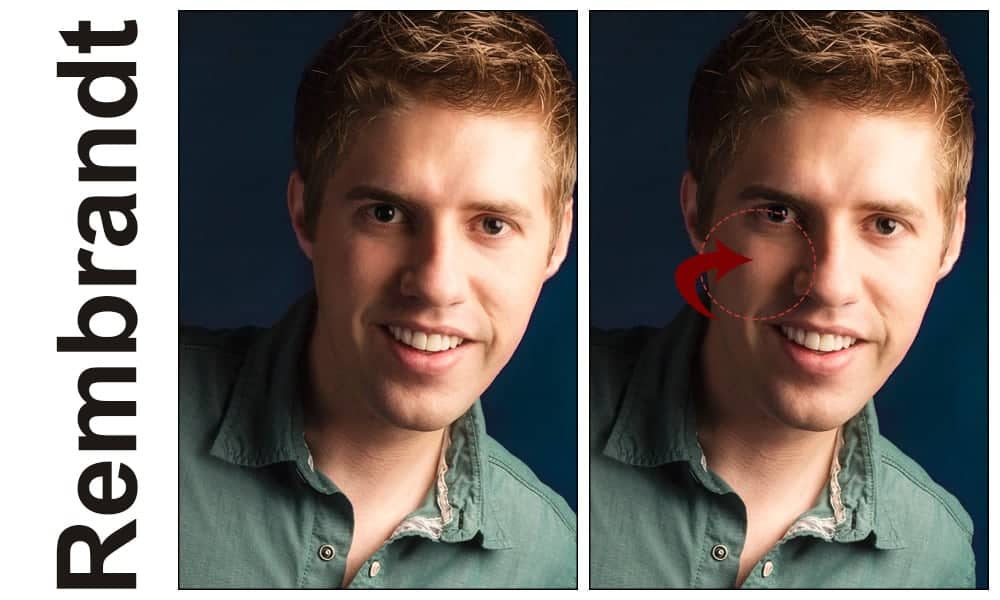
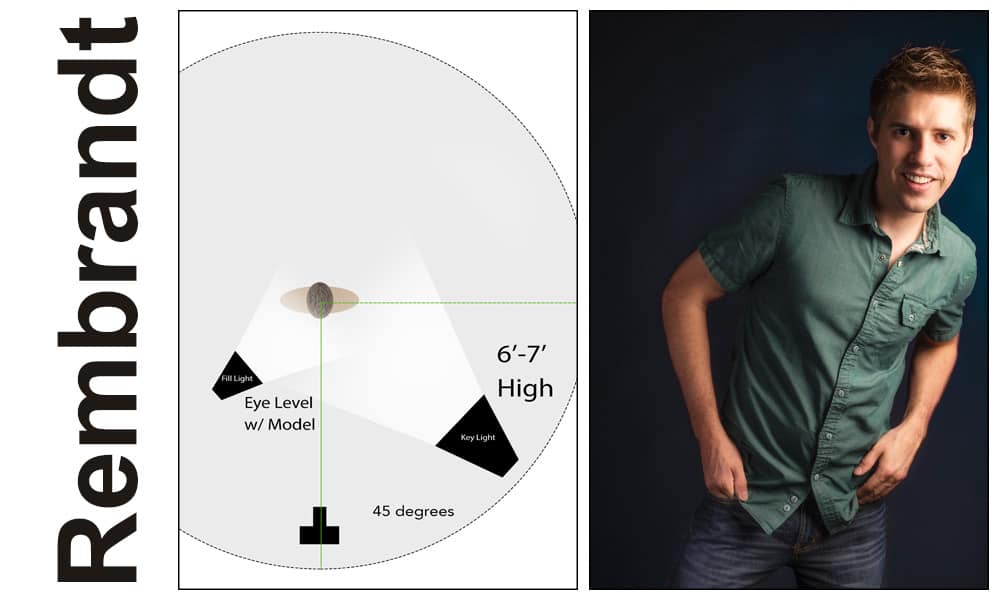
In Rembrandt Lighting, you're looking for a small triangle of light that appears on the opposite cheek from where the flash is placed. This is a very common lighting style and will look flattering on almost anyone you try it on. A good rule of thumb when placing lights is to always place the light on the side where the model parts their hair — particularly with female models. Otherwise, the model's hair will cast a big shadow across their face.
In Rembrandt Lighting, you're looking for a small triangle of light that appears on the opposite cheek from where the flash is placed. This is a very common lighting style and will look flattering on almost anyone you try it on. A good rule of thumb when placing lights is to always place the light on the side where the model parts their hair — particularly with female models. Otherwise, the model's hair will cast a big shadow across their face.
The Setup
| Some Tips
|
Headshot Lighting
What to Look For
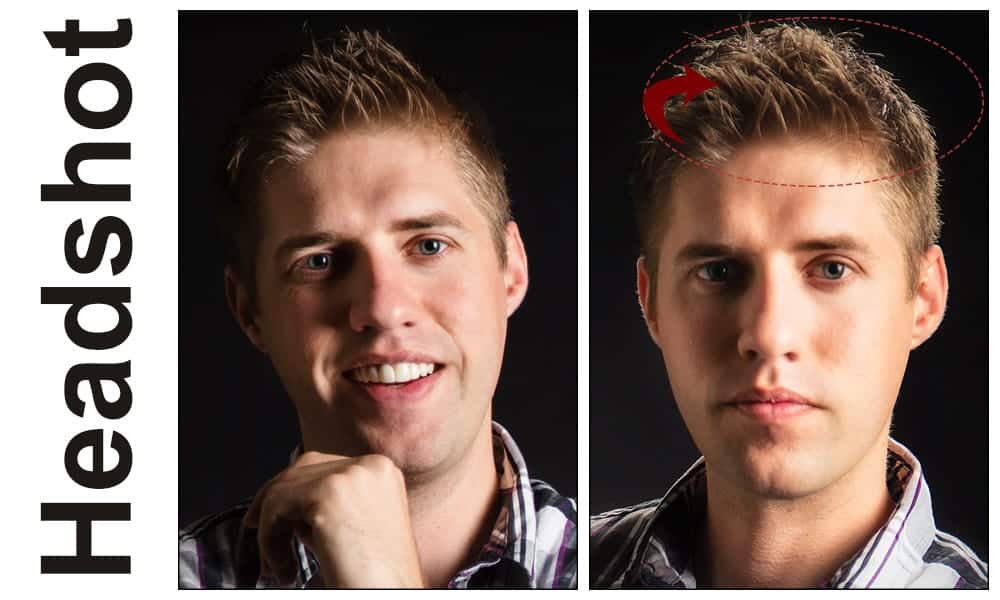
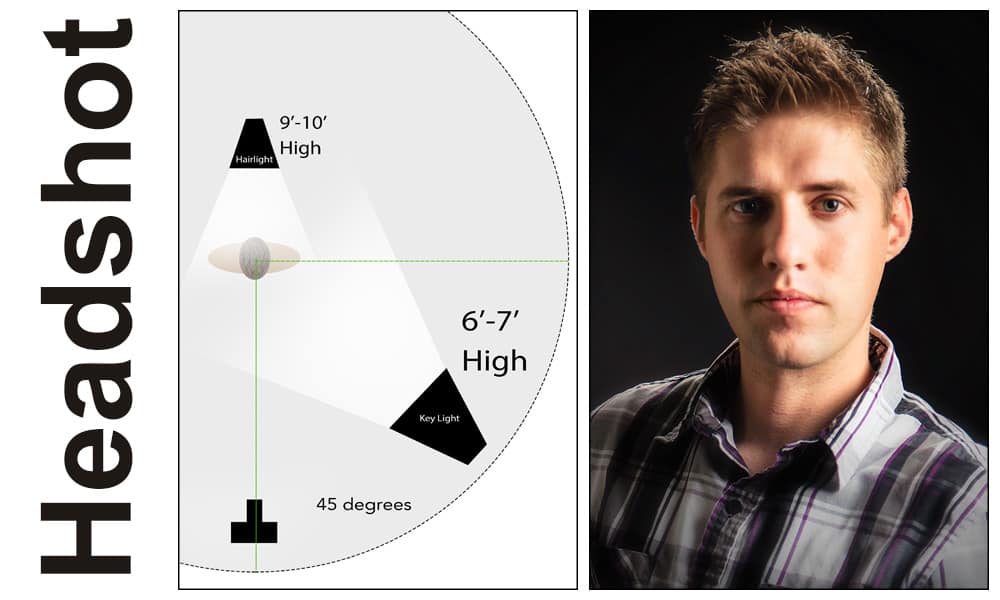
Headshot lighting is important when shooting on darker backgrounds. Sometimes, the color of the model's hair will blend right in with the shadows and the color of the background. Use a hair light to create an outline around their head and pull them off the background. The way you can recognize this lighting style is when there are visible highlights on the person's hair. This can be overdone, so be careful and only apply enough light to create the outline.
Headshot lighting is important when shooting on darker backgrounds. Sometimes, the color of the model's hair will blend right in with the shadows and the color of the background. Use a hair light to create an outline around their head and pull them off the background. The way you can recognize this lighting style is when there are visible highlights on the person's hair. This can be overdone, so be careful and only apply enough light to create the outline.
The Setup
| Some Tips
|


No comments:
Post a Comment