Want to grab a top-quality camera but don't want to pay full whack? Good news: you don't need to.
Today's cameras are so advanced you really don't need to spend as much as you once did. The best cheap cameras are capable, reliable performers that produce fantastic images – and all without breaking the bank.
THE BEST CHEAP CAMERA DEALS: QUICK LINKS
That's not to say there's no point in buying a more
advanced camera, of course – there are many good reasons to do so. But if you just need something that will give you all the essentials, you'll find the best cheap cameras – and the best camera deals for each model – in this buying guide.
Read on for our pick of brilliant budget compact, mirrorless and DSLR cameras. Whether you just want something to slip into your pocket, or something that will allow you to access a world of lenses and
accessories to take your photography in new directions, one of the following cheap cameras is likely to suit.
The best cheap DSLR camera deals
1. Canon EOS Rebel T6 / EOS 1300D
A no-frills entry-point to the huge EOS system
Type: DSLR | Sensor: APS-C | Megapixels: 18MP | Lens mount: Canon EF-S | Screen: 3in fixed, 920k dots | Viewfinder: Optical | Continuous shooting: 3fps | Movies: Full HD (1080p) | User level: Beginner
Wi-Fi and NFC included
Huge choice of EF and EF-S lenses
No Dual Pixel CMOS AF
Screen isn't touch-sensitive
Canon has focused on getting the basics right with the EOS 1300D, and it's hard to find fault if you're just looking to get started with DSLR photography. This is one of the best cheap cameras out there, and you can grab it for a bargain price. Sure, the 18MP sensor isn't quite the newest, and it understandably misses out on some of the useful tech found in more recent models. But the 3in, 922k-dot LCD screen, Full HD video recording option and Wi-Fi+NFC connectivity settings expected at this level are all present. Furthermore, Canon has beefed it up with Creative Filters to help you bypass Photoshop with instant processing effects, as well as a Feature Guide to teach you more about what all the different options do. Meanwhile, exposure control stretches all the way from Auto+ to fully Manual so that the camera continues to provide enough growing space as you develop your skills and knowledge. This is one of the best cheap DSLRs out there.
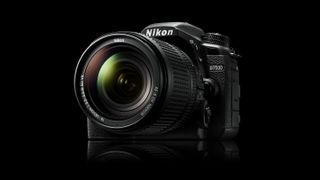
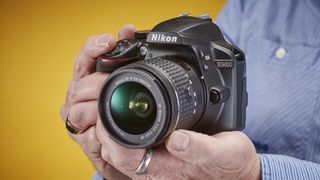
2. Nikon D3400
Nikon's baby DSLR is a fuss-free model with a sound sensor and impressive battery life
Type: DSLR | Sensor: APS-C | Megapixels: 24.2MP | Lens mount: Nikon F | Screen: 3in fixed, 921k dots | Viewfinder: Optical | Max burst speed: 5fps | Max video resolution: 1080p (Full HD) | User level: Beginner
Excellent battery life
Tiny, lightweight body
Connectivity could be better
No sensor cleaning
When it comes to fantastic cheap cameras – and brilliant camera deals – the Nikon D3400 is a top pick. As sad as we were to see the previous D3300 leave us, Nikon did at least cherry-pick its best features and throw in a handful of extras to make the D3400 an even sweeter proposition. Existing technologies that we're happy to see once again include the company's 24.2MP APS-C sensor, which has no low-pass filter for excellent detail retention, as well as EXPEED 4 processing and an 11-point system, together with Full HD video recording to 60p and a 3in LCD screen with a respectable 921k-dot resolution. The Guide mode is also useful, as it lets first-time users get better acquainted with their camera and its capabilities. The fact that the camera lacks automatic sensor cleaning is something of a pity, but if this bothers you you can turn your attention to the excellent (and only slightly more expensive)
D5300 model.
3. Canon EOS Rebel SL2 / EOS 200D
A flip-out LCD, Dual Pixel CMOS AF and excellent connectivity make the EOS 200D a winner
Type: DSLR | Sensor: APS-C | Megapixels: 24.2MP | Lens mount: Canon EF-S | Screen: 3-inch tilting touchscreen, 1,040,000K dots | Viewfinder: Yes, optical | Continuous shooting: 5fps | Movies: Full HD (1080p) | User level: Beginner
Dual Pixel CMOS AF is great
No 4K video
9-point AF system
The EOS Rebel SL2, also known as the EOS 200D, isn't Canon's most junior DSLR proposition, but the fact that it was launched relatively recently means that it provides novice users with some of the company's latest technological goodies. These include the excellent Dual Pixel CMOS AF system, which delivers mirrorless-like autofocus performance in live view and effective adherence in movies, as well as the latest DIGIC 7 processing engine and the full Wi-Fi, NFC and Bluetooth triplet of wireless connectivity options. 5fps burst shooting is decent, and the option to attach a microphone boosts its Full HD video capabilities, while compatibility with decades worth of quality Canon lenses only further enhances its appeal. The only significant area where the camera is a little behind is with its 9-point AF system; if you want something a little more capable here, the
older EOS 750D model or
Nikon's 39-point D5300 alternative would be worth considering.
The best cheap mirrorless camera deals
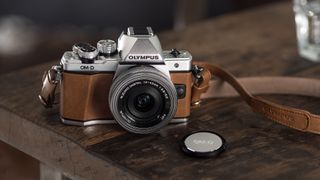
4. Olympus OM-D E-M10 Mark II
This handsome OM-D model marries masses of features with plenty of physical control
Type: Mirrorless | Sensor: Micro Four Thirds | Megapixels: 16.1MP | Lens mount: Micro Four Thirds | Screen: 3in tilting, 1.04million dots | Viewfinder: EVF, 2.36million dots | Max burst speed: 8.5fps | Max video resolution: Full HD (1080p) | User level: Beginner/enthusiast
Excellent image stabilisation
Twin dials for DSLR-like control
Complex menus
Not the newest sensor
Another example of a camera that's a little older and now great value because of it, the OM-D EM-10 Mark II has an admittedly ageing 16MP Micro Four Thirds sensor, but on top of this it boasts a 2.36million-dot EVF, a tilting touchscreen, a very effective five-axis image stabilisation system, Wi-Fi and an 8.5fps burst-shooting mode. 4K video doesn't feature, but you do get a 4K time-lapse function that lets you output images captured over an extended period of time as 4K-quality time-lapse video, and the Full HD recording to 60p offered is at least the next best thing. Definitely a camera that's designed for those who want far more than just point-and-shoot control, the body is laden with buttons and switches, and you can customise these external controls to a high degree. Furthermore, an exhaustive range of Micro Four Thirds lenses makes it unlikely that the lens you need doesn't exist. Like what you see but want something a little more powerful?

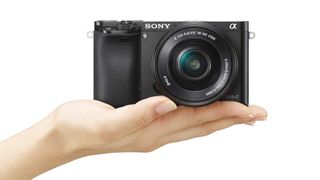
5. Sony A6000
For its entry-level asking price, the A6000 packs a raft of mid-range features
Type: Mirrorless | Sensor: APS-C | Megapixels: 24.3MP | Lens mount: Sony E-mount | Screen: 3in tilting, 921,600 dots | Viewfinder: Electronic, 0.39-inch, 1,440,000 dots | Max burst speed: 11fps | Max video resolution: Full HD (1080p) | User level: Enthusiast
Superb AF system
Sound image quality
Video not 4K
No weather sealing
For a long time it was Sony's A5100 that made more sense for the cash-strapped beginner looking to get to grips with mirrorless shooting, but as the A6000 has steadily dropped in price, it's now the clear favourite. Much like its RX100 model (above), Sony has kept this in its mirrorless line up for some time, and it continues to offer a very solid set of specs against other models in in the same price bracket. Highlights include a 24.3MP APS-C sensor, 11fps burst option, Wi-Fi with NFC and a tilting LCD screen on the back, but its the excellent 179-point phase-detect AF system and 2.36million-dot EVF that really show it to be a camera willing to perform to a standard beyond expectations at this level.
6. Panasonic Lumix GX850 / GX800
4K video and a 180º touchscreen make the budget GX800 stand out
Type: Mirrorless | Sensor: Micro Four Thirds | Megapixels: 16MP | Lens mount: Micro Four Thirds | Screen: 3in tilting touchscreen, 1,037,000 dots | Continuous shooting speed: 10fps | Max video resolution: 4K | User level: Beginner/enthusiast
Excellent features-to-price ratio
4K video recording
Relatively low battery life
No viewfinder
It's one of the cheapest Micro Four Thirds cameras you can buy right now, but with 4K video and a tilting, selfie-friendly touchscreen on board, it trounces many competitors straight away. There's lots to love elsewhere too, from the Depth From Defocus (DFD) AF system and built-in Wi-Fi, to the ability to extract 8MP stills from 4K video footage. The 5fps burst-shooting mode is respectable too, and while the the 210-shot battery is a little on the low side – no doubt a concession made to get the camera so small – you can at least usefully charge it up via its USB port. Overall, a unique, well-priced proposition for the first-time mirrorless user looking to travel light.
The best cheap compact camera deals
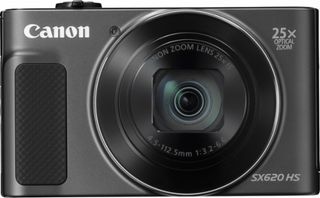
7. Canon PowerShot SX620 HS
A whole lot of zoom and a handful of extra sweeteners for a very reasonable asking price
Type: Superzoom compact | Sensor: 1/2.3in | Megapixels: 20.2MP | Lens: 25-625 (equiv.) f/3.2-6.3 | Screen: 3in fixed LCD, 922k dots | Viewfinder: No | Max burst speed: 2.5fps | Max video resolution: Full HD (1080p) | User level: Beginner
High-resolution LCD screen
Massive zoom range
Narrow aperture at telephoto
Lacklustre burst-shooting speed
Most manufacturers have shifted their focus to the top end of the compact market, which means there's not as much choice as there used to be here. Nevertheless, Canon's 20.2MP PowerShot SX620 HS stands out. While many other cameras at this level are fairly pedestrian in what they offer, the PowerShot SX620 HS's big draw is its 25x optical zoom, which offers a focal range equivalent to 25-625mm in 35mm terms – and this is, thankfully, bolstered by Canon's Intelligent Image Stabiliser. The spec sheet is rounded off with Full HD video, a 3in LCD screen that has a very respectable 922k-dot resolution and both Wi-Fi and NFC. Sure, it'd be nice to have a touchscreen and a more recent processing engine, but these are far from essential on such a camera.
8. Panasonic Lumix ZS50 / TZ70
With a 30x optical zoom and a built-in EVF, the ZS50 is ideal for travels and holidays
Type: Superzoom compact | Sensor: 1/2.3in | Megapixels: 12.1MP | Lens: 24-720mm f/3.3-6.4 | Screen: 3in fixed LCD, 1.04million dots | Viewfinder: EVF, 1.116million dots | Max burst speed: 10fps | Max video resolution: Full HD | User level: Beginner
Built-in EVF
No touchscreen
LCD fixed in place
If you have a slightly more accommodating budget, the Panasonic ZS50, also known as the TZ70, is well worth considering over the Canon above. Not only do you get the advantage of a broader zoom range that ends at a mammoth 720mm (35mm-equivalent) setting, but you also benefit from a built-in electronic viewfinder – very useful in harsh light. Panasonic has even provided focus peaking for precision when manually focusing and time-lapse video option, and even Raw shooting (although this is arguably less significant on a camera with such a small sensor). On that subject, don't let the sensor's 12.1MP pixel count throw you off; Panasonic deliberately reduced this from the 18.1MP TZ60 that came before it for the benefit of image quality in low light. Full HD video recording to 60p, effective Hybrid O.I.S. image stabilisation and both Wi-Fi and NFC on top of all this make the SZ50 unquestionably brilliant value for money.
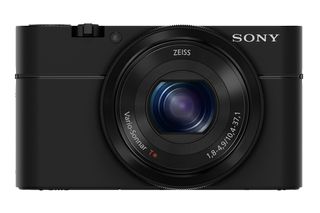
9. Sony RX100
If you don't need the latest tricks, Sony's first 1in-sensor RX100 model should make your shortlist
Type: Compact | Sensor: 1in | Megapixels: 20.1MP | Lens: 24-70mm (equiv.) f/1.8-2.8 | Screen: 3in fixed, 1.228million dots | Viewfinder: No | Max burst speed: 5fps | Max video resolution: Full HD (1080p) | User level: Enthusiast
Excellent value for money1in-type sensor
Small maximum aperture at 100mm
Handling not for everyone
Sony's original RX100 was released all the way back in 2012, but the fact that you can still pick one up brand new says a lot. Blending a 20.1MP 1in-type sensor with a 28-100mm f/1.8-4.9 lens inside a tiny body, this was the camera that very much raised the standard for such models. The series has since welcomed four further iterations, and these have all been very well received, but in terms of value for money the original model is still difficult to argue with. Sure, its age means it misses out on a few newer technologies, but you get Steady-Shot image stabilisation, 10fps burst shooting, Full HD video to 60p and a control ring around the lens for more immediate changes to key settings.
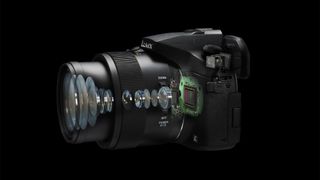
10. Panasonic FZ1000
With a 1in sensor, a wide-aperture superzoom lens and 4K video, the FZ1000 is an absolute bargain
Type: Supzerzoom compact | Sensor: 1in type | Megapixels: 20.1MP | Lens: 25-400mm (equiv.) f/2.8-4 | Viewfinder: EVF, 2.36million dots | LCD: 3in vari-angle LCD, 921k dots | Max burst speed: 12fps (50fps in SH mode) | Movies: 4K and Full HD | User level: Enthusiast
Great 4K video recordingExcellent sensor/lens combination
No touchscreen
Bulky
One of the pricier cameras on this list, but the FZ1000 offers such superb value for money that it simply can't be omitted. On top of the very solid foundation of a 20.1MP 1in sensor and a 25-400mm f/2.8-4 Leica-branded optic, Panasonic has gifted the camera with Power O.I.S. image stabilisation, Raw file capture, 12fps burst shooting and both Wi-Fi and NFC. Videos are captured in both 4K and Full HD quality, with a 120fps setting in Full HD for slow-motion output, together with advanced options such as zebra patterning and even a 3.5mm mic port, while a 2.36million-dot electronic viewfinder is partnered with a fully-articulated 3in LCD. Can you find another camera that can provide all of that for the same money? Nope!